LAW, ETHICS, & NEWS LITERACY
LAWFUL & ETHICAL JOURNALISM
As a son of a judge, I have been educated about the rules and regulations of the world I live in and how the process works. I always excelled in Government class when it came to the branches of government and how specifically the judicial system worked. Even with all of the prior knowledge, when I became a journalist I did not properly research the rules and regulations of being a newsman and I learned a lot from that mistake.
I learned how to credit artists, use royalty free music, and why my writing, reporting, and broadcasting must be factual. These are specific examples, but when boiled down, I am continually learning how to be a law-abiding, ethical journalist, but my mistakes have made me aware of my need for this growth.
NEWS LITERACY.
As a journalist, I must be truthful & accurate, independent, fair, transparent, and accountable. Here is how I commit to achieving these pillars:
-
Being a source of truth and accuracy is something I take pride in. Regardless if I am on camera, on the mic, or writing, it is imperative that I provide accurate information to my audience. I go to extra lengths in my already extensive research so I am never in a position where I would present something intentionally to the audience that is false or misleading.
-
As a journalist I realize that my audience has a diverse range of beliefs and social norms. I have to treat each and every person in that grouping as equal and report with no bias. There are different examples of this, but I am intentional to not bring political issues into my sports media projects specifically because I believe sports is one of the few places people can go to unite and not divide.
-
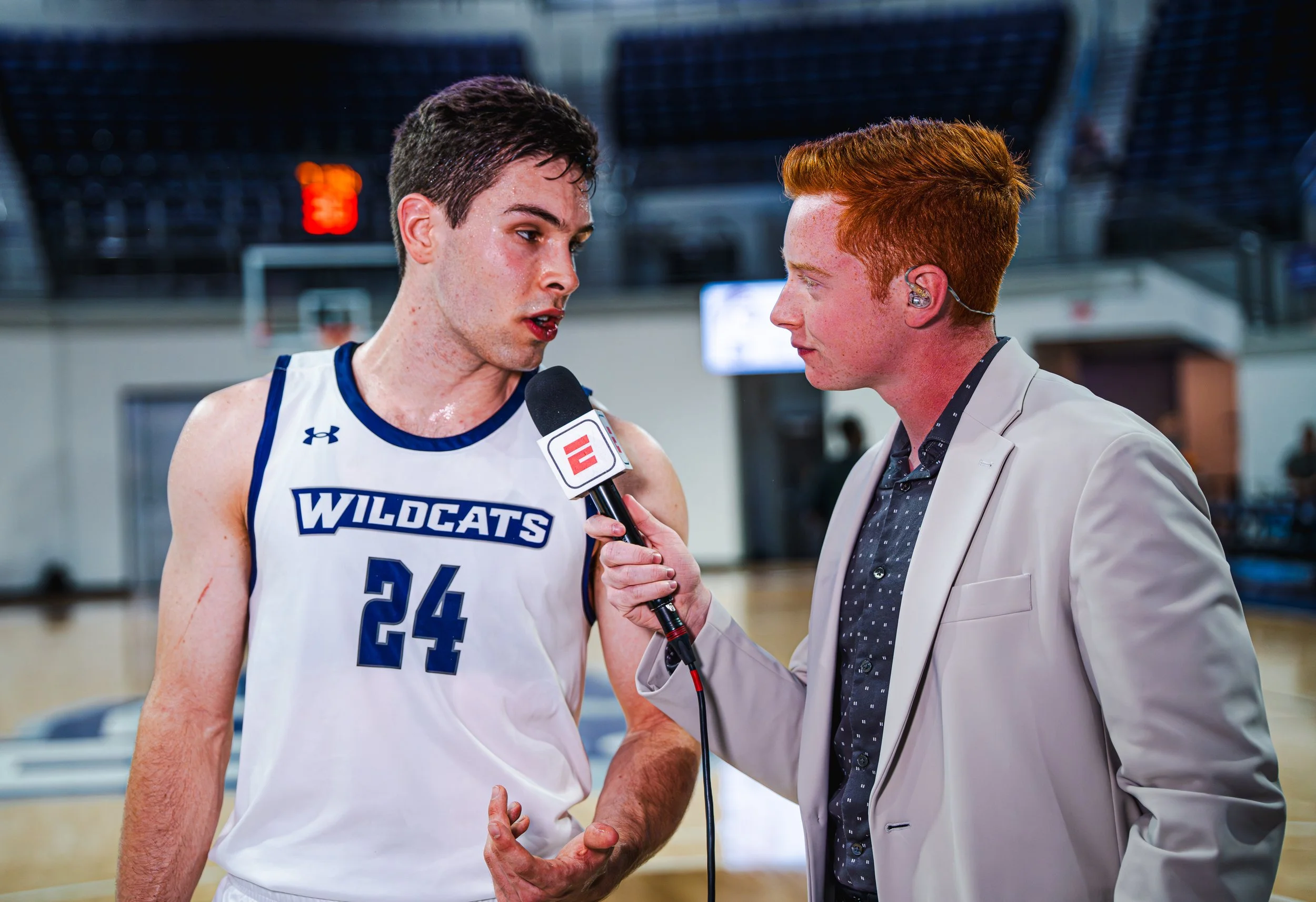
My Athletic Director sat me down when we first discussed me becoming the voice of Charger Athletics. He said from the beginning that my goal should be to make every broadcast a "positive experience for everyone". This included the other team's parents, the officials families, and our home fans. I am intentional to recognize positives regardless if it is tied to the team I am covering or not and make everything I do a 'positive experience for everyone'.
-
There is a difference between being kind and sugar-coating. As a journalist it is my job to deliver factual information, not fluffed up anecdotes. I am brutally honest in everything I do, but not without being kind. I believe there is a middle and I work daily to maintain that intentional middle ground, because it benefits everyone.
The audience, the students, and me.
-
One of the first steps to becoming an ethical and lawful journalist is admitting mistakes when I they come up. Between pronouncing an athletes name wrong or crediting the wrong person I have made many mistakes, but once I make them I am intentional to avoid repetition of that mistake by taking measures to avoid future struggles like talking to coaches beforehand.
FACT?
HOW I HANDLE THE LARGEST ISSUES FACING CREDIBILITY IN TODAY’S DAY IN AGE
-
I am not afraid of AI, but I do realize the impact it is having on the common consumer today. The issue is that people believe sites like ChatGPT will provide them with accurate, well-researched information and that is simply incorrect. While AI systems like GPT will provide basic information that might be accurate, when it comes to details there are so many issues. The reason I know this is because I tested the system, asking questions that were detailed. From who won awards to what college certain players went to, it failed almost all. The most unfortunate part of the entire experiment is how ChatGPT responded, presenting answers that appeared to be factually backed, but where completely wrong. I will use AI as a basic foundation to where my research will take me, but I do not trust anything that appears to be factually-backed from AI. I do my own research.
-
In a world where click-bait run rampant it is difficult to decipher between accurate and false information on social media. Pages run by seemingly authentic and well-meaning people are exposed as false news sources. The Wall Street Journal found during the election of 2024 that actors and pages flooded TikTok with false information to attack both political parties. This example further solidified my confidence in finding, checking, and double-checking all of my sources. Social Media is the mainstream media source in today's society, but that doesn't mean the facts are mainstream as well.
-
The news industry as it stands has one thing on their mind, and it's not factual reporting. The importance of speed and 'being the first' has been at the forefront of journalism for decades, but the sacrifice of factual sources has proved to degrade the media industry as a whole. I think back to the movie, The President's Men, and how those journalists stumbled upon a story and could have published their findings every time they discovered something, but they researched and interviewed into the early hours of the morning, becoming completely confident that their sources and information where factually-backed. This is what I aspire to achieve in my journalism. I want to be a credible source that doesn't sacrifice the truth for an expediated process.